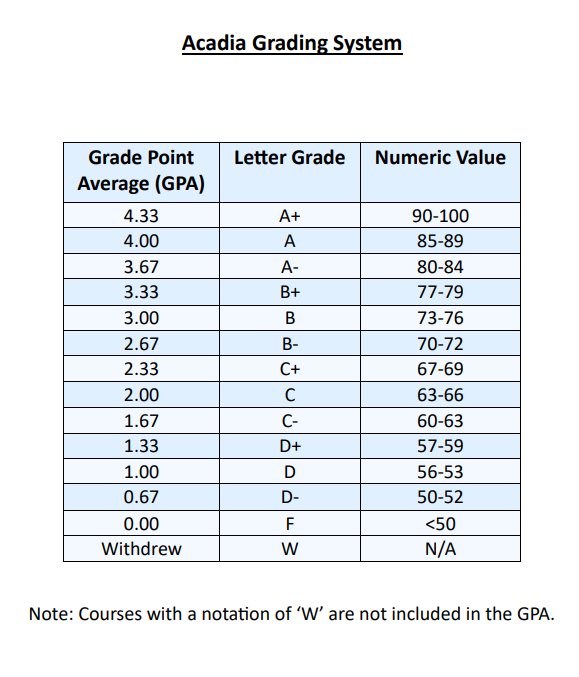
Understanding the Grading System: What Your Grades Really Mean
Understanding the grading system is essential for students who wish to navigate their academic journey effectively. Grades are not just letters or numbers; they represent a comprehensive evaluation of a student's performance in various subjects. The most common grading scale in many educational institutions includes letter grades from A to F, where A typically signifies excellent performance, and F indicates failure. To gain a deeper insight into what each grade means, it’s important to consider not just the letter but also accompanying metrics such as grade point averages (GPA) and class rankings.
Moreover, understanding the grading system's intricacies can help students set realistic academic goals. For instance, a grade of B may indicate good comprehension of the material, whereas a C might suggest a need for improvement. It's also helpful to be aware of weighting schemes used in courses, where certain assignments or exams carry more significance in the final grade. By recognizing these factors, students can prioritize their efforts and communicate effectively with educators regarding their academic standing and any necessary support.
Counter-Strike is a highly popular tactical first-person shooter franchise that has garnered a massive following since its inception. Players engage in team-based gameplay, often taking on the roles of terrorists or counter-terrorists in various objective-based game modes. It emphasizes strategy, teamwork, and precise shooting skills. If you're also interested in protecting your devices while gaming, check out the Top 10 Military Grade Shockproof Cases for iPhone 17 for some great options.
Decoding Grades: How They Reflect Student Learning and Potential
Grades are more than just numbers on a report card; they serve as a reflection of student learning and a gauge of future potential. When educators assign grades, they assess various factors such as comprehension, participation, and the ability to apply knowledge in practical scenarios. This multifaceted approach allows teachers to identify areas where students excel and pinpoint subjects that may require additional support. By analyzing trends in grades over time, stakeholders—teachers, parents, and students alike—can gain insights into a learner’s strengths and weaknesses, paving the way for targeted interventions and personalized learning paths.
Furthermore, it is essential to consider that grades can also influence a student's motivation and self-esteem. High grades can foster confidence, encouraging students to engage deeper with subjects and pursue challenging coursework. Conversely, persistent low grades may lead to frustration and disengagement. Therefore, understanding the true essence of grades goes beyond quantitative evaluation; it involves nurturing a positive learning environment that emphasizes growth and development. By decoding grades, we can better support students in realizing their full potential and inspire them to embrace a lifelong love of learning.
Are Grades a True Measure of Intelligence? Exploring the Debate
The debate surrounding whether grades are a true measure of intelligence has been ongoing for decades. Many argue that traditional grading systems fail to encapsulate a student's complete intellectual abilities and potential. Grades, often determined by standardized tests and assignments, can be influenced by various external factors including socio-economic background, teaching methods, and personal circumstances. This raises the question: do these numerical values accurately reflect a student’s cognitive abilities or creativity? As educational systems continue to evolve, it is crucial to examine how grades correlate with true intelligence and what alternatives might offer a more holistic approach to assessing student capabilities.
On the other hand, proponents of standardized grading argue that grades provide a necessary benchmark for measuring academic achievement and success. They contend that grades are crucial for maintaining educational standards and fostering accountability in both students and educators. The argument follows that while grades may not capture every nuance of intelligence, they do offer a quantifiable way to compare student performance across a wide spectrum of subjects and skills. However, this perspective often overlooks the fact that intelligence is multi-dimensional, embracing creativity, emotional understanding, and practical skills that traditional grading may neglect. Ultimately, the discussion about the value of grades as a measure of intelligence encourages a broader conversation about how we define and recognize learning in its many forms.